With the significant development and achievement in comforting our lifestyle, we often compromise in terms of environment part and thus end up causing more harm to Earth and ultimately future generation. To cope with the growing environmental problem, the government of Australia has taken a significant step where an individual can play his role to save the Earth. Eager to play your part of the role? One such method is the BASIX certificate; we’ll help you to find the details about the same in this blog.
What is BASIX?
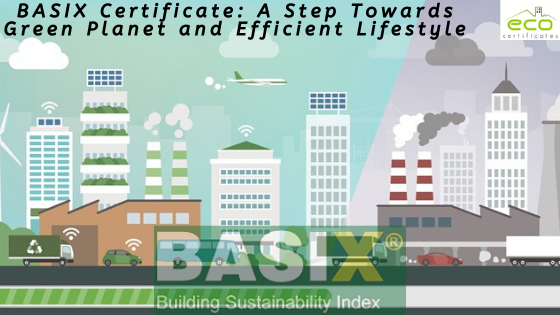
Introduced by the government of South Wales, BASIX stands for Building Sustainability Index is a planning tool used for new development as well as the renovation of a home up to the value of $50,000. The main aim of the certificate is to reduce the greenhouse gas effects and save water and energy consumption across South Wales.
This tool is used to calculate the energy unit and water score based on factors like location, fixtures, size and design. The main goal behind the establishment of the BASIX Report is to reduce the 40% of water consumption and greenhouse gas effect by 25%.
The tool offers online assessment where one has to get the expected performance of residential development in terms of energy, water and thermal usage. The building design must pass a specific target to count themselves eligible for the BASIX Certificate.
Who requires a BASIX certificate?
BASIX certificate is a mandatory requirement for all those who are lodging the development application for the following:
- New granny flats;
- Renovations of $50,000 or more to an existing home;
- New dual occupancies;
- New houses;
- Swimming pools or spas larger than 40,000 litres;
- New townhouses and villas;
- New flats and apartments;
- Conversion of an existing non-residential building to a residential building.
Some of the suggestions for BASIX Certificate compliance.
- Consider alternative water sources for example rainwater;
- Choosing an efficient hot water system;
- Usage of eaves and window shading;
- Design the home in terms of landscape, size and placement of windows;
- building material will reduce energy consumption;
- Orientation size of the building;
- Water-saving taps, showerheads;
- Light coloured roof material;
- Choose energy-efficient systems.
By contributing to the efficient development planning, you are not only helping future generation for the green planet but also helping yourself as it will ultimately lead to the reduction of water and energy bills.
Play your Role
Now it’s your time to play your role to save Earth by availing BASIX certificate for your house. BASIX certificate is a benchmark set by the government to reduce the effect of harmful gas emission. To cut down the process, hire the service of BASIX certificate service provider as their expert service help you to cut down the cost and process length.



Comments
Post a Comment